

Tyre size
Understand scooter tyre size markings, choose safe sizes for 110–125cc scooters, and maintain tyres for grip, stability, and comfort.
Tyre size affects your scooter’s grip, stability, handling, and comfort. You can find the tyre size printed on the tyre sidewall (for example, 100/80-12). Always use the tyre size recommended in your scooter’s manual to ensure safety and proper performance.
Understanding Tyre Size Specifications
Tyre sizes are written in a format such as 100/80-12. Each number has a specific meaning.
Tyre Width (mm)
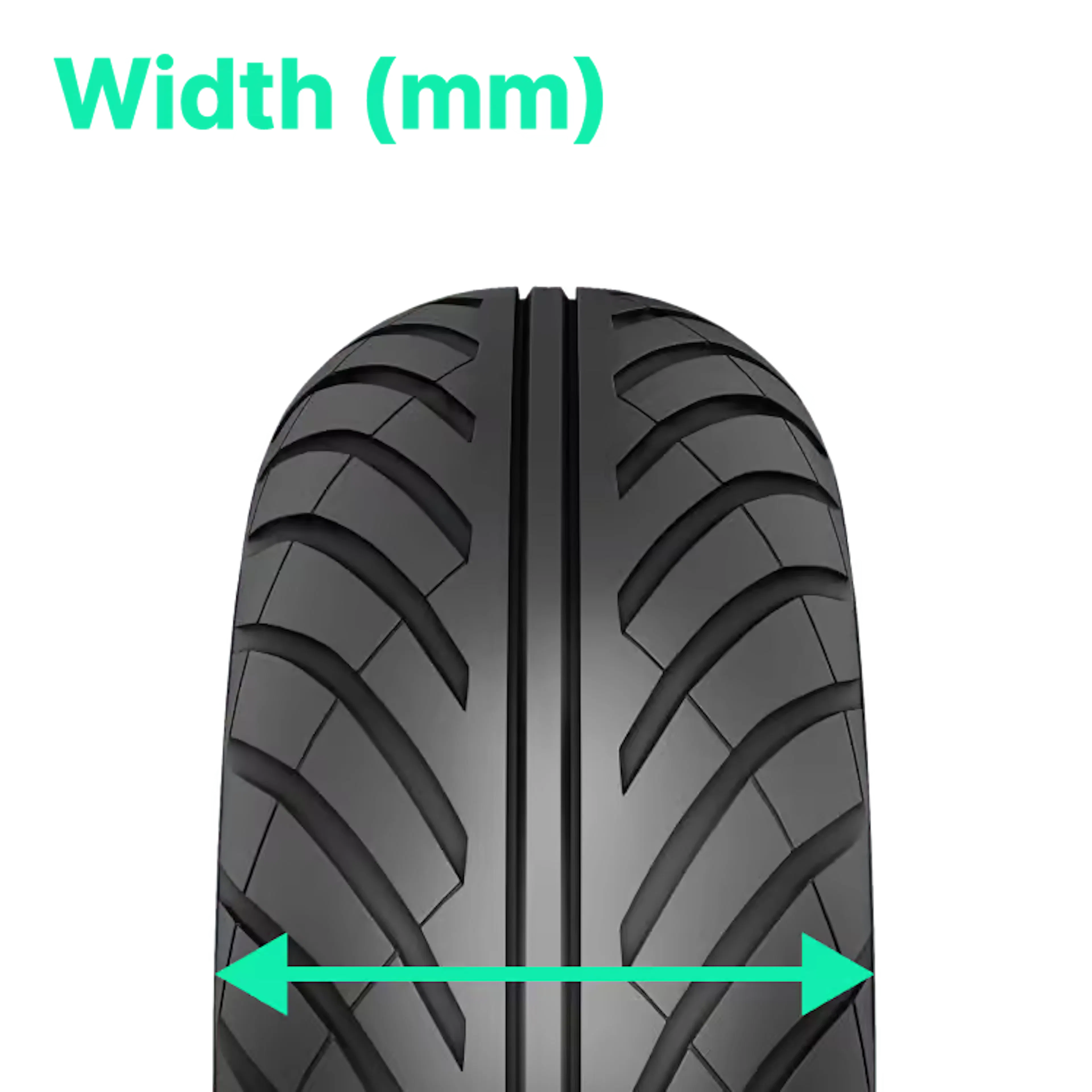
Measured in millimetres, this is the width of the tyre from sidewall to sidewall. For example, a 100-width tyre is 100 mm wide.
Impact on performance: Wider tyres generally provide more grip and stability but may slightly reduce fuel efficiency.
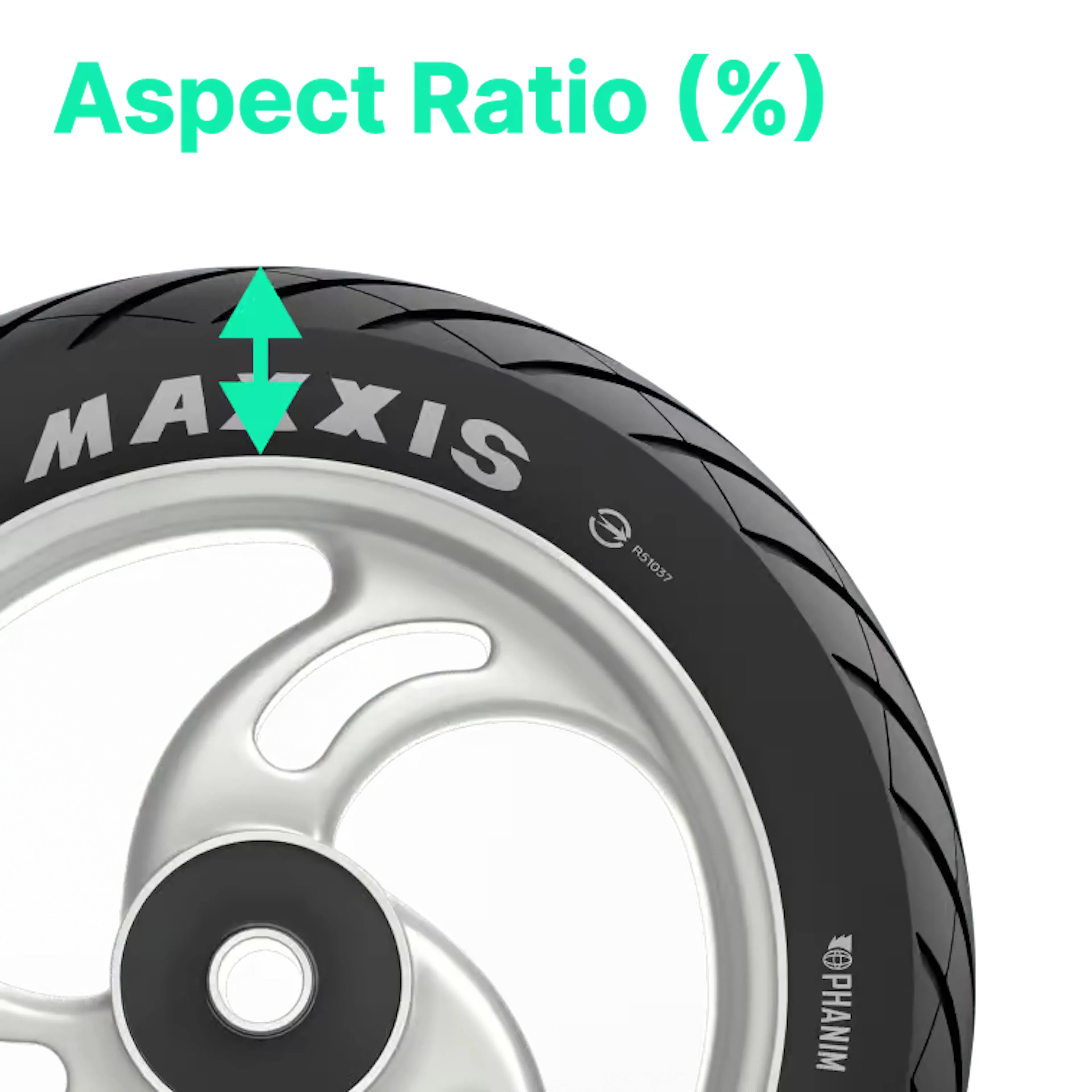
Aspect Ratio (%)
/image
The aspect ratio is the height of the tyre’s sidewall expressed as a percentage of its width. For example, an 80 aspect ratio means the tyre’s height is 80% of its width.
Impact on performance: A lower aspect ratio gives sharper handling and better cornering but a firmer ride. A higher aspect ratio gives a smoother, more comfortable ride but less cornering precision.
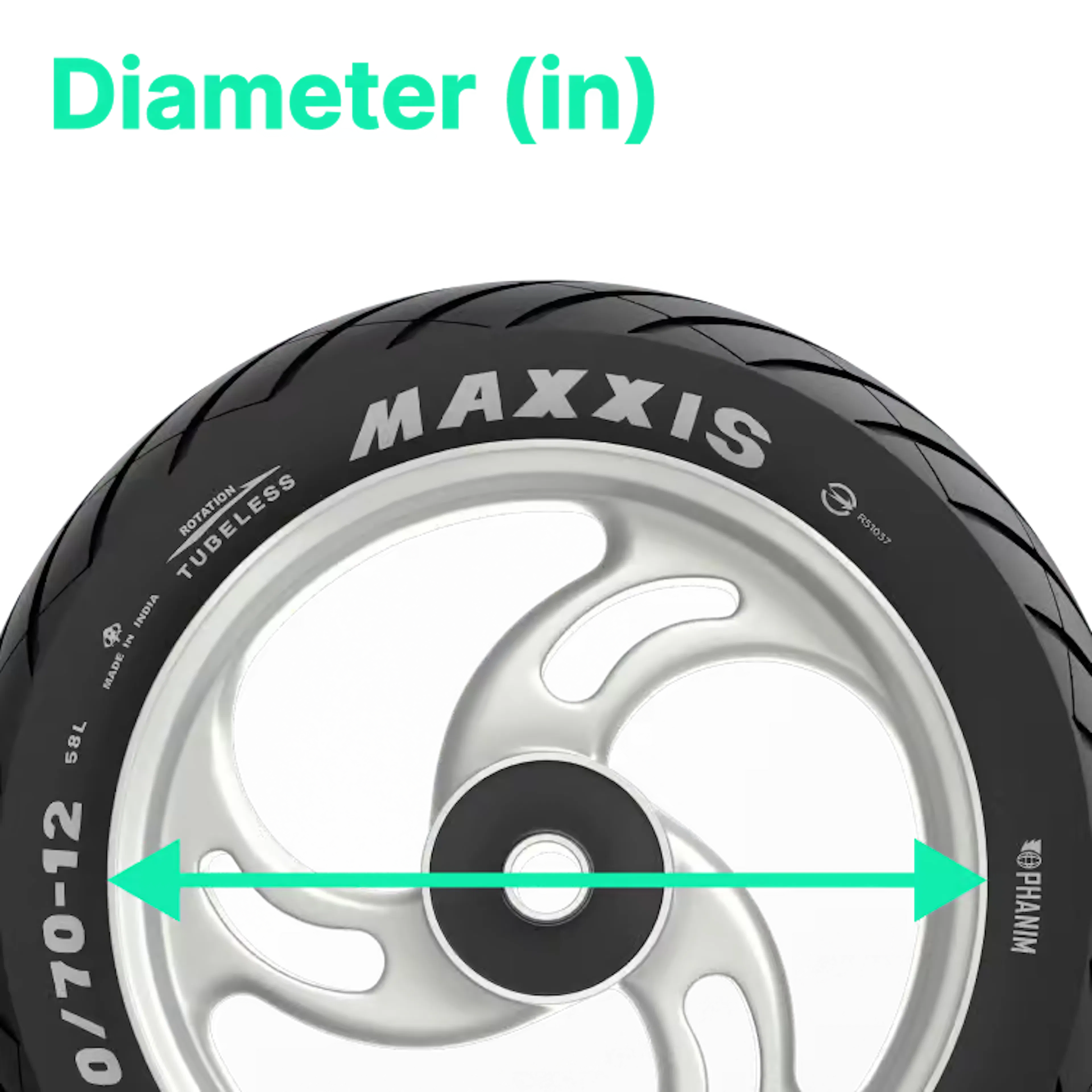
Rim Diameter (inch)
/image
Rim diameter is the diameter of the wheel rim in inches. For example, 12 means the tyre fits a 12-inch rim.
Impact on performance: The rim diameter must always match your scooter’s wheel size so the tyre fits and performs correctly.
Common Tyre Sizes for 110cc–125cc Scooters
Front Tyres
-
90/90-12
-
100/80-12
Rear Tyres
-
100/80-12
-
110/70-12
Always check your scooter’s manual or the tyre sidewall to confirm the correct size before replacing tyres.
How to Choose the Right Tyres
City Commuting
Recommended: 100/80-12 or similar.
Why: Provides a balance of grip, fuel efficiency, and comfort for stop–start traffic.
Long-Distance or Higher-Speed Riding
Recommended: 110/70-12 or similar.
Why: Lower aspect ratio tyres offer improved stability and control at higher speeds.
Wet or Rainy Conditions
Recommended: Tyres with deeper tread patterns designed for wet weather.
Why: Improves water dispersion, increases grip, and reduces the risk of aquaplaning.
Tyre Maintenance Tips
Check Tyre Pressure Weekly
Use a pressure gauge and follow the manufacturer’s specifications. Correct pressure improves fuel efficiency, safety, and tyre lifespan.
Monitor Tread Depth
Replace tyres when tread depth reaches 1.6 mm or below. A tread depth gauge provides an accurate reading.
Inspect for Damage
Check regularly for cracks, cuts, bulges, exposed cords, or uneven wear. Replace the tyre immediately if you find significant damage.
Understand the Effects of Incorrect Tyre Pressure
Underinflation
-
Increases tyre wear
-
Reduces fuel efficiency
-
Raises the risk of overheating or blowouts
Overinflation
-
Reduces road grip
-
Causes uneven tread wear
-
Results in a harsher ride
Consider Nitrogen Inflation
Potential benefits may include:
-
More stable pressure retention
-
Lower operating temperatures
-
Extended tyre life
When to Replace Your Tyres
Replace your tyres if:
-
Tread depth is below 1.6 mm n- You notice visible structural damage
-
Handling feels unstable
-
Braking distances increase
-
The tyre vibrates excessively while riding
Punctures and Repairs
Small punctures may be repairable depending on their location and severity. Always have punctures inspected by a qualified technician.
Do not attempt unsafe roadside or DIY repairs.
Our Recommendation
Use only tyre sizes and specifications recommended in your scooter’s manual. Choose tyres based on your riding style and road conditions. If you are unsure, contact our team for guidance.
Final Notes
Using the correct tyre size ensures proper handling, safety, fuel efficiency, and ride comfort. Regular inspections and proper inflation significantly reduce the risk of premature tyre wear or accidents. Avoid fitting non-recommended tyre sizes, as even small changes can affect braking, stability, and suspension performance.
FAQs
Refer to your vehicle’s manual for the recommended PSI. Adjust pressure if carrying additional weight such as a passenger or cargo.